DEFENSE & AEROSPACE ALUMINUM ANODIZING
Anodizing is one of the most widely specified finishes in defense and aerospace, where aluminum parts have to survive harsh field conditions and still meet spec. It builds corrosion and wear resistance into the surface of the metal, gives primers and paint a strong base to bond to, and provides electrical insulation for enclosures and assemblies. NIA anodizes aluminum components to MIL-A-8625 Type II and Type III requirements, backed by an ISO 9001-certified quality process with the records to support traceability.
THE STANDARD THAT GOVERNS THIS WORK
MIL-A-8625 is the model specification for much of the anodizing required on military and aerospace products, covering requirements for anodic coatings on aluminum and aluminum alloys for non-architectural applications. It sets performance and acceptance criteria for coating weight, corrosion resistance, paint adhesion, abrasion resistance, and appearance — and it forms the basis for many proprietary specifications used by individual defense and aerospace companies.
NIA processes Type II and Type III anodizing to MIL-A-8625 requirements, matched to what your component and program call for.

TYPE II — SULFURIC ANODIZE
The general-purpose specification finish — corrosion resistance, paint adhesion, and consistent coating weight. Widely specified for components where protection and primer adhesion are the primary requirements. Available in Class 1 (undyed) and Class 2 (dyed).

TYPE III — HARDCOAT ANODIZE
The high-performance option for components that face mechanical wear, friction, or demanding field conditions. Type III produces a significantly thicker, harder oxide layer — the foundational specification for aerospace applications where parts face wear and heat. Available in Class 1 (undyed) and Class 2 (dyed). Harder than mild steel at the surface.
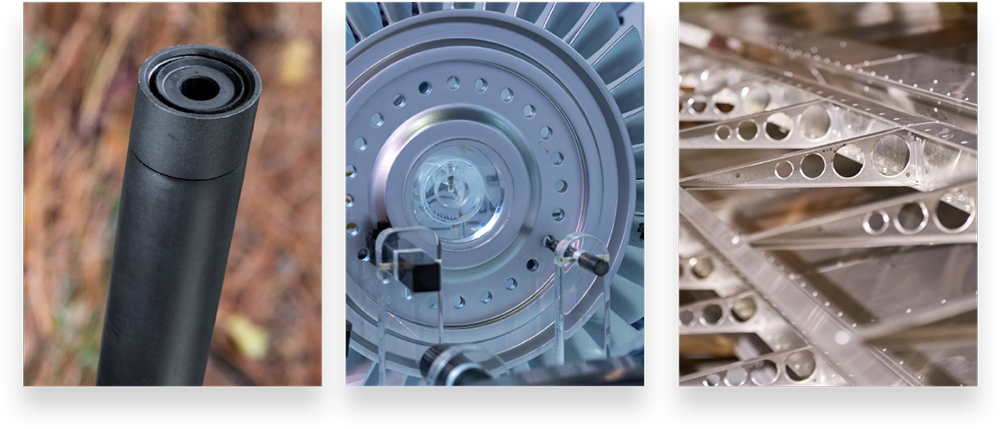
WHAT WE ANODIZE FOR DEFENSE & AEROSPACE
- Structural aluminum components and housings
- Brackets, fittings, and fastener assemblies
- Ground support equipment components
- UAV and unmanned systems structural parts
- Electronic enclosures requiring electrical insulation
- Precision machined components requiring tight coating thickness control
SEE HOW IT’S DONE
GET A QUOTE
Tell us about your part — material, size, process, and quantity — and we’ll get back to you within 48 hours.
FREQUENTLY ASKED QUESTIONS